
A senior government official confirms that Indian vessels do not require permission to navigate the Strait of Hormuz, despite regional tensions. Several Indian ships, including LPG tankers, have safely crossed the strait, ensuring continued supply of essential commodities to India.

Tea planters in Darjeeling have raised that a shortage of commercial LPG, triggered by the ongoing conflict in West Asia, could hit tea processing during the first flush, the delicate early-season harvest that commands the highest premiums and often sets the tone for the year.

India's merchandise exports experienced a slight decrease in February, while imports surged due to increased gold and silver purchases, leading to a widened trade deficit. The West Asia crisis is expected to further impact trade in the coming months.

'Nobody explained why. After that there was panic buying, there was hoarding -- and then nothing reached us.'

India continues to face LPG supply challenges for the third consecutive week due to disruptions caused by the West Asia conflict, though panic buying is showing signs of easing. The government is prioritising domestic household supplies and encouraging alternative fuel sources.

Replacing over a third of India's oil imports at competitive rates is going to be a challenge, said traders from State refiners, even though some progress was made in the last two months.

'It would be similar to what happened during COVID-19.' 'They are not just losing income, but being pushed into distress.'

India's privatisation push, once projected as a cornerstone of economic reform, has suffered another setback, with the Centre set to call off the IDBI Bank stake sale, highlighting the political and structural constraints shaping the country's disinvestment policy, experts say.

Indian eateries are adapting to the LPG crisis by cutting menus, increasing prices, and switching to alternative fuels like coal, as LPG supplies are disrupted due to global events. State authorities are cracking down on hoarding and black marketing of LPG cylinders.

Egypt, Pakistan, Saudi Arabia and Turkey met in Islamabad in what analysts say is the formal opening of a new diplomatic formation that could reshape the post-war regional order. Their immediate goal is a ceasefire; their larger ambition is to ensure that neither Iran nor Israel emerges from this war in a dominant position. Pakistan's foreign minister then flew directly to Beijing and mooted a Chinese role as guarantor of any eventual agreement. Prem Panicker continues his must read daily blog on the Gulf War.

The LPG squeeze on India's restaurant sector is the quotidian face of a deeper crisis.
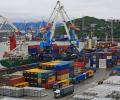
The country's exports rose marginally by 0.61 per cent to $36.56 billion in January, while trade deficit widened to a three-month high of $34.68 billion, government data showed on Monday.

The pause gives the US time to breathe, to regroup, to move its expeditionary force into position without risk of interception along the way. It gives Iran nothing -- on the ground, attacks against its infrastructure continue apace. Prem Panicker in his must read daily blog on the Gulf War.
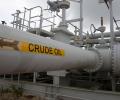
MEA spokesperson Randhir Jaiswal said India's energy decisions are guided by national interest.

The Kremlin has stated that India is free to purchase oil from any country, dismissing claims that India agreed to reduce Russian oil imports. Russia maintains that energy trade with India benefits both nations and contributes to international energy market stability.
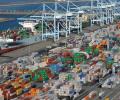
'The immediate impact for India will be very minimal as the share of Venezuela in our total overseas production is very low.'

Growth of eight key infrastructure sectors remained flat in October as expansion in output of petroleum refinery products, fertiliser and steel was offset by a contraction in coal and electricity production, according to official data released on Thursday.
State-owned Bharat Petroleum Corporation Ltd (BPCL) is willing to dilute a 30-40 per cent stake in its upcoming greenfield refinery in Andhra Pradesh, with Gulf energy major Saudi Aramco and upstream player Oil India Ltd (OIL) likely to join as partners, a senior BPCL executive said.

India has called for a ceasefire, release of all hostages, and peaceful resolution of the Israel-Hamas conflict through dialogue and diplomacy. The Centre informed Parliament that India welcomed the agreement on the first phase of the Gaza Peace Plan. The article also covers India's energy sourcing strategy and the release of Indian fishermen by Pakistan.

Wholesale price inflation (WPI) came in at (-) 0.32 per cent in November, driven by an uptick in prices of food articles like pulses and vegetables on a month-on-month basis, government data showed on Monday.

A 500 per cent tariff would effectively shut out India's goods and services exports to the US.

India is growing fast, but to keep growing strong, the government must make more things at home, create jobs, and spend money wisely, suggests Rajiv Memani, regional managing partner, Africa-India Region, EY.

India said it is broad-basing and diversifying sourcing of petroleum product to meet market conditions.

The Mumbai Bench of the National Company Law Tribunal (NCLT) on Tuesday gave its approval to Vedanta Limited's demerger proposal, clearing the way for the group to reorganise its operations into five distinct, sector-specific entities.

Saudi Arabia's steep cut in LPG benchmark prices has pushed India's household LPG underrecoveries to their lowest level in over two years, slashing oil companies' losses from Rs 200-250 per cylinder last year to about Rs 20-40 now.

India's exports jumped by 19.37 per cent to $38.13 billion in November, while imports dipped by 1.88 per cent to $62.66 billion, according to government data released on Monday.

Next week's three-nation foreign tour of Prime Minister Narendra Modi will see India and Oman sign a free trade deal. The visit will also pave the way for agreements with Ethiopia and Jordan to increase India's bilateral trade and investments.

Wholesale price inflation (WPI) fell to (-) 1 .21 per cent in October, driven by a decline in prices of food articles like pulses and vegetables, as well as lower fuel and manufactured items' prices, government data showed on Friday.
India's exports rose 6.7 per cent to $35.1 billion in August annually, while imports declined 10.12 per cent to $61.59 billion, according to government data released on Monday. Gold imports were down nearly 56 per cent in August, helping to trim merchandise trade deficit to $26.49 billion in August, as against $35.64 billion in the year-ago month.

The consumption of petroleum products in India is growing at a rate much lower than the conservative projection of 4.58 per cent made for this year by the Petroleum Products Planning and Analysis Cell (PPAC), a wing of the petroleum ministry.
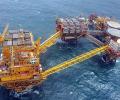
ONGC's overseas arm applied for a sanctions waiver to access $500 million dividend from two Venezuelan projects.

The National Company Law Tribunal (NCLT) on Wednesday deferred the hearing on Vedanta Ltd's proposed demerger to September 17, as market regulator Sebi is yet to complete the scrutiny of the proposal, while the central government has raised certain objections. The matter, which was part-heard earlier, had been adjourned to August 20.
Videocon Petroleum has earned a temporary reprieve from termination of its contract for Ravva oil and gas field, by agreeing to pay $15 million as part payment for the profit petroleum due to the government.\n\n\n\n
Sumitra Mahajan on Tuesday took over as the minister of state for petroleum and natural gas.
President A P J Abdul Kalam has given his assent to the Petroleum and Natural Gas Regulatory Board Act that envisages having a regulator for India's oil and gas sector, a petroleum ministry official said on Tuesday.
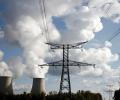
India's brittle energy security is inextricably linked to two opposing paradigms - fossil fuels, and the transition to green energy. The first powers the present; the second paves the way for Viksit Bharat in 2047.

'The US is strongly placed to expand its crude supplies to India.'

The Supreme Court rejected a PIL challenging the nationwide rollout of 20% ethanol-blended petrol (EBP-20), citing benefits to sugarcane farmers. The plea alleged incompatibility issues with older vehicles.

Problems at refineries, higher home demand for automobile fuels among main reasons.

India's new climate pledge to the UN could be weakened by its growing use of coal, even as the country plans a 2035 roadmap to cut emissions and boost clean energy.
